
Climate Change and Nature Loss Demands Comprehensive Security, Not Just Hard Security
Climate change and nature loss are increasingly framed as security threats demanding hard security responses. Instead, the problem needs to be addressed at the root. A more complete, comprehensive approach to addressing the security implications of climate breakdown and nature loss should treat military responses as one option among many, while prioritising addressing the root causes, local agency, and peacebuilding, to deliver effective, durable and cost-efficient outcomes.
Read these recommendations in PDF form here.
The current challenge:
Treating symptoms, not causes. A narrow security lens privileges force and state-centric responses, deepens existing power imbalances, and overlooks the local realities and root causes that actually drive instability, ultimately increasing insecurity over the long term.
Militaries are contributing to the problem, not just solutions. Armed forces are major consumers of fossil fuels and major sources of pollution and biodiversity loss, through training, combat operations, logistics, and base construction, with impacts routinely excluded from climate-security narratives.
Perpetuating a vicious cycle. Securitising the climate response can intensify competition over resources and territory, which in turn drives further militarisation, increases global emissions further, including through rising military spending, and crowds out the civilian, diplomatic, and development capacity needed to address root causes.
Increasing military funding, while decreasing climate funding. Across Europe and North America, increasing military spending is being funded, in part, through cuts to official development aid (ODA), sustainable development, and climate action. These funding shifts are generating new challenges and fuelling instability.
The better path: Comprehensive security
Hard security and militarised responses should be a last resort; one facet of a wider security toolkit, and not the default. Evidence-backed alternatives already exist and tend to be more cost-effective, more locally owned, and more resilient to shocks:
Peacekeeping and unarmed civilian protection in conflict-affected, climate-stressed settings.
Environmental cooperation as an entry point for peacebuilding, including emerging work on cross-border water diplomacy and environmental peacekeeping, where security, civilian, and different kinds of actors are increasingly finding common ground.
Inclusive, conflict-sensitive, locally-driven, and diverse adaptation strategies that require less cost-intensive investment and hold up better under global shocks than uniform, top-down interventions.
Why does it matter?
Future-proofs strategy: anticipating climate-driven instability through comprehensive planning reduces the operational burden of reacting to it by force later.
Avoids overextension: environmental and water-related cooperation offer a credible, lower-risk role for security actors — without stretching into civilian spaces they are not built for.
Cheaper and more durable: development–defense collaboration on climate risk heads off costlier militarised responses down the line.
Protects civilian space: inclusive, locally-driven, conflict-sensitive responses are more resilient to shocks and keep funding and mandates from drifting toward securitisation by default.
Recommendations:
Lead with comprehensive/human security framing in strategy documents and multilateral fora, explicitly naming hard security as a last resort, not a default.
Build development–defense dialogue mechanisms (civil-military cooperation) that bring civilian, military, and local actors together early on climate-related risk (e.g. joint planning on water and resource stress, information sharing on civil-led humanitarian and development action ).
Protect and resource civilian peacebuilding capacity, resisting further militarisation of climate adaptation funding and mandates.
Bring the evidence into the room: cite the cost and resilience advantages of locally-driven, inclusive, conflict-sensitive responses whenever militarised alternatives are proposed.
Ensure that hard security policies do not compromise climate and environmental commitments, through robust monitoring and governance of military and defence industry climate and environmental impacts.
While climate change and nature loss certainly are security issues, we must ensure we respond with strategies that address their causes rather than merely manage their consequences. By investing in prevention, peacebuilding, and environmental resilience today, we build a more secure, stable, and sustainable future for everyone.
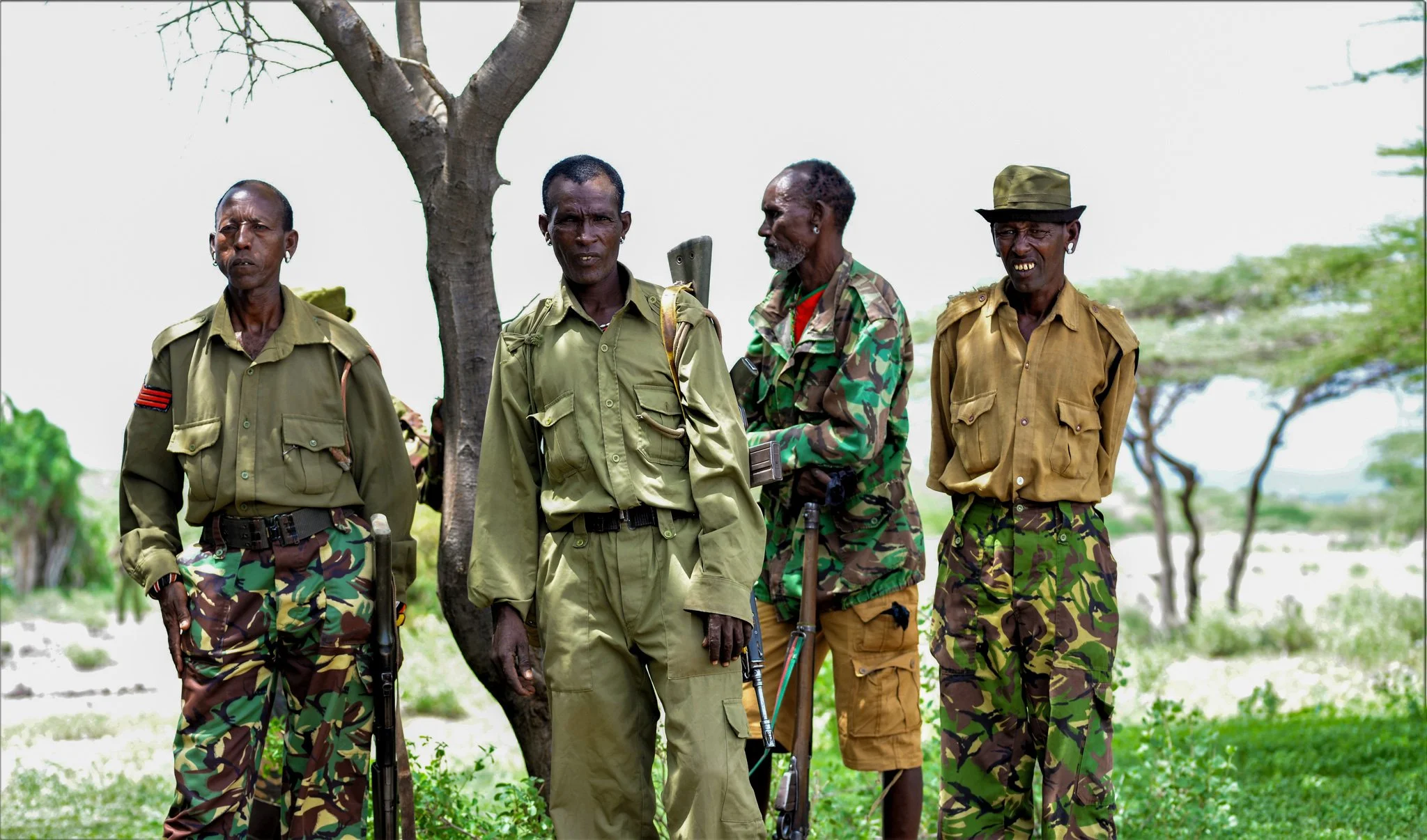
The securitisation of intertribal negotiations over shared resources and landscapes threatens long-term prospects for sustainable peace in Kenya and around the world.
photograph by Faith Kathami Mutegi
What is the cost case?
Locally-driven, conflict-sensitive responses tend to be more cost-effective and more resilient to shocks, partly because they need less cost-intensive investment and are more likely to match what local communities actually need. In many countries, funding is being reduced for development/diplomacy and being reprioritised towards defense, which prevents funding from going to cost-effective solutions.
Relevant resources
what resources do you want to add here?
Frequently asked questions
“Is climate change a genuine security threat?”
Yes — the issue isn't whether security is relevant, it's that treating it primarily as a hard security threat narrows the response to force and state-centric tools, which the evidence shows worsens vulnerability over time.
“Don't we need militaries ready for climate-driven instability?”
Readiness matters, but the most future-proof strategies start with development, diplomacy, and local partnership — that reduces the operational burden on militaries later rather than expanding their mandate now.
“Isn't this just anti-military messaging?”
No — it's about right-sizing roles. Security actors have a credible part to play (environmental peacekeeping, water diplomacy) without being stretched into civilian work they're not resourced or built for.
“Don't militaries already manage their environmental footprint?”
Not in how the conversation is usually framed — fuel use, pollution, and biodiversity impacts from operations and bases are still largely excluded from climate-security accounting and debate.
“Does framing really change outcomes?”
Yes — framing shapes where funding and attention flow. Securitised framing pulls resources toward force-based responses and away from the civilian and diplomatic capacity that's more effective at addressing root causes.