Indigenous Languages, Communities and Cultures
1. Can you tell us a bit about you and your community?
I am Gibrilla Kamara founder and Executive Director for the Society for Indigenous Languages, Communities and Cultures (SILCC).
I was born and raised in a remote village in Kambia district where I was fortunate to join the indigenous languages adult literacy in Konta village (my home town) later tested with the white missionary and decided to send me to formal school. My family was too poor to send me to formal school. Due to my ability to read and write my native language, the white missionary said he will send me directly to the secondary school instead of primary school. At the time I completed my secondary school, the Sierra Leone civil war escalated nationwide. The white missionary had to return home, and communication stopped.
I later traveled to the city when the war was over. I found a security job at the Institute for Sierra Leonean languages, not knowing that the institution was established by the missionaries. I was at the security post most times reading my native language books published by the institute, sometimes circling typographical errors and grammar mistakes. The language coordinator noticed my skills and passion for reading books and identifying existing errors, and I was called by the director to know more about me and where I studied the language. They were interested to know the university I attended. But I told them that I haven’t gone to university yet, so I shared my village story. They said “Oh! We know Reverend Schmitt! He even retired from the mission” I asked for his contact, but that was not successful. They asked me to change my job to be one of their literacy facilitators and later, a supervisor.
In 2013, I got a job with the US Peace Corps as a Language and Cross Cultural Facilitator (LCF). After my first contract with the Peace Corps, I was able to save some funds which I could use for university. While I was in university, Sierra Leone experienced an Ebola outbreak. Universities were closed. During that period, I got a job with the US Centers for Disease Control CDC as language and cultural liaison officer for the foreign doctors. I later returned back to the university to complete my Degree.
In 2020, I founded the Society for Indigenous Languages, Communities and Cultures (SILCC). It was officially registered in 2022 with the mandate to revitalize endangered languages, cultures and the environment of the communities. SILCC works in Kambia district, northern part of Sierra Leone.
2. What inspired you to work with languages? Why does this work matter?
As someone who started his education through indigenous language, I see how easy it is to be literate in a language you can speak and understand better. In this juncture, I found out that Sierra Leone has no institution working to preserve endangered languages. The only institution is the Institute for Sierra Leonean language which is working with dominant languages with the focus of teaching the Bible.
This is what inspired me to focus on the endangered language: Language cannot be separated from culture, and culture cannot be separated from the environment.
3. How does the protection of languages connect to environmental peacebuilding?
In the African culture, languages, Culture and environment are interwoven:
Four main important aspects of this are as follows:
Language protection
Peace building
Biodiversity Protection
Culture
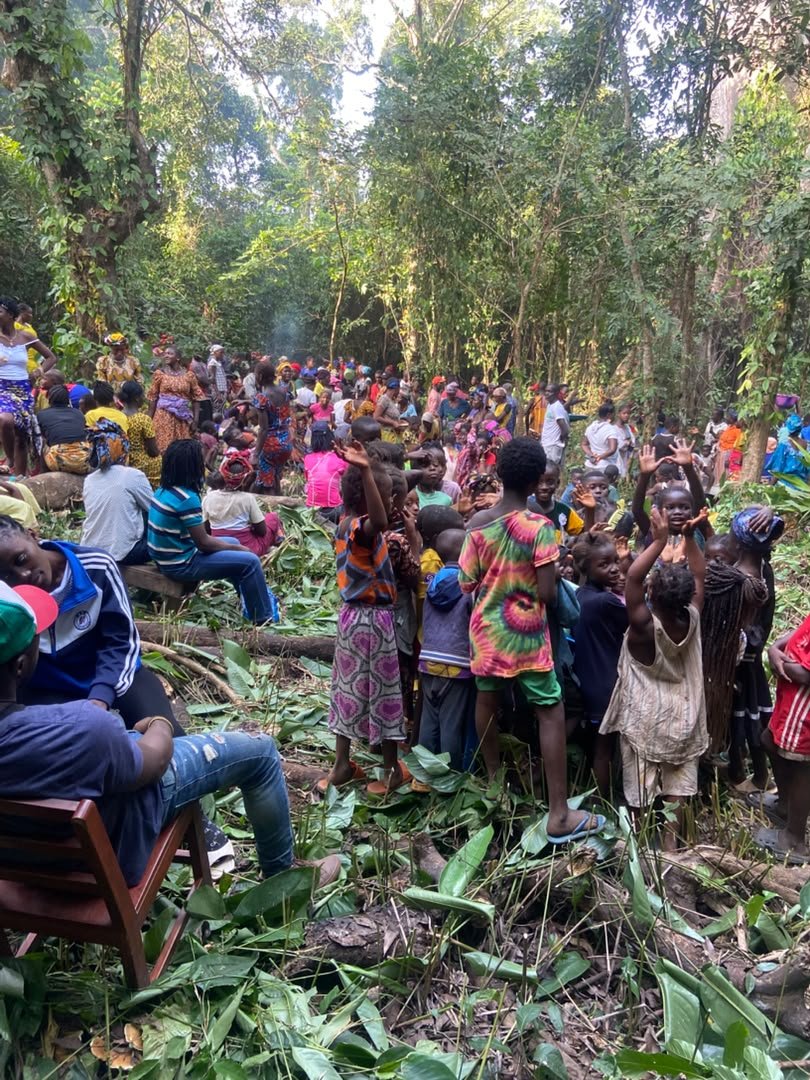
In many African countries, each village has a sacred forest.
Before the colonial era, our ancestors believed in the existence of the Supreme Being (God), and they believed that the sky is God. Cotton trees are the biggest and tallest trees you can find in our environments; from a distance, you can see the trees are very close to the sky (God), so the ancestors think the tree can easily communicate with God on their behalf. Every year, before the planting season begins, they always go to the sacred forest to ask for good crop yield. It is a very important ceremony where neighboring villages will come to support through traditional music, songs, rituals. The forest can be approximately 400 to 500 acres of land. Part of the forest is used for cemeteries, as well as traditional camps.
When the ceremony is scheduled, usually in one month's time, if you have a conflict with your neighbor, your wife or anyone, you have to be at peace. That period of waiting for the date is called the month of peace. Major disputes are requested by elders to be settled. It is highly prohibited to go to the sacred ceremony forest with divided minds. They believe that the ancestors lying in the forest will be with them during the ceremony. They were monolingual, and they wanted to hear the living beings speak the indigenous language, not a different language there. They also want to see us unite; people need to be at peace at this time. In the sacred forest, no one dares to cut a tree or hunt animals. Animals were believed to be the angels of the gods.
Upon the arrival of religions, preachers condemned the cultural practice. Today, Sierra Leoneans are mostly either Christian or Muslim. The ceremonies have been abandoned, deforestation hiked, the language declined, the month of peace is not observed anymore.
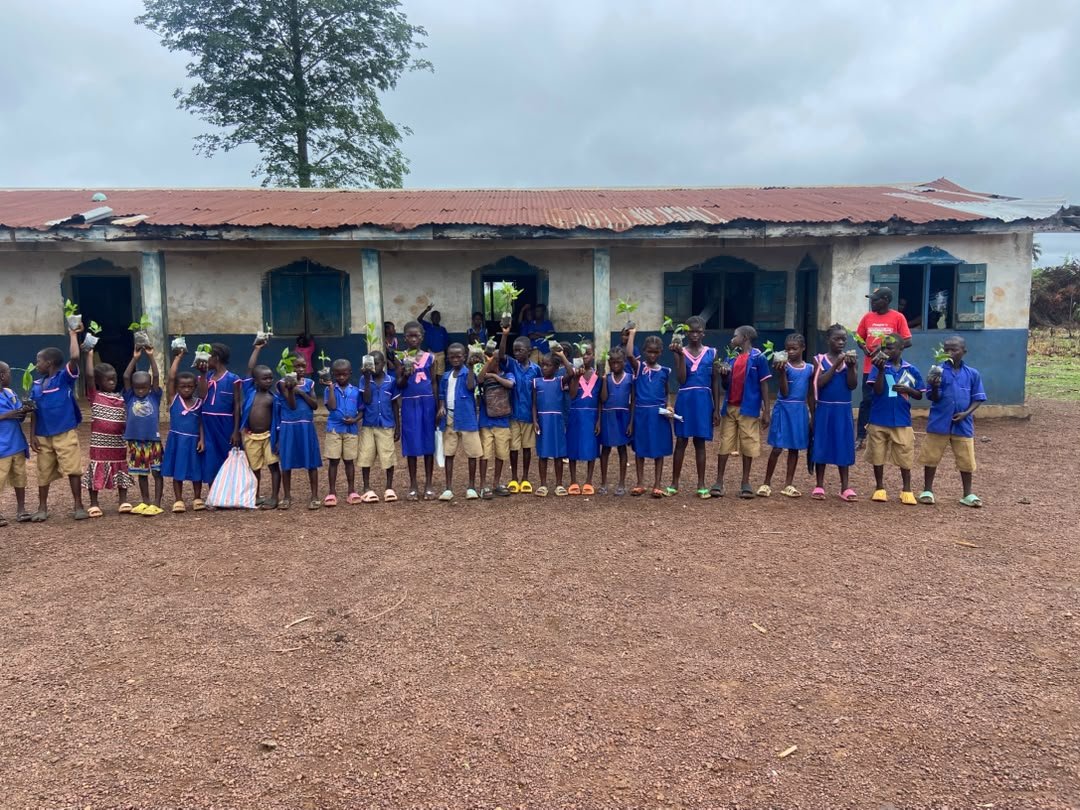
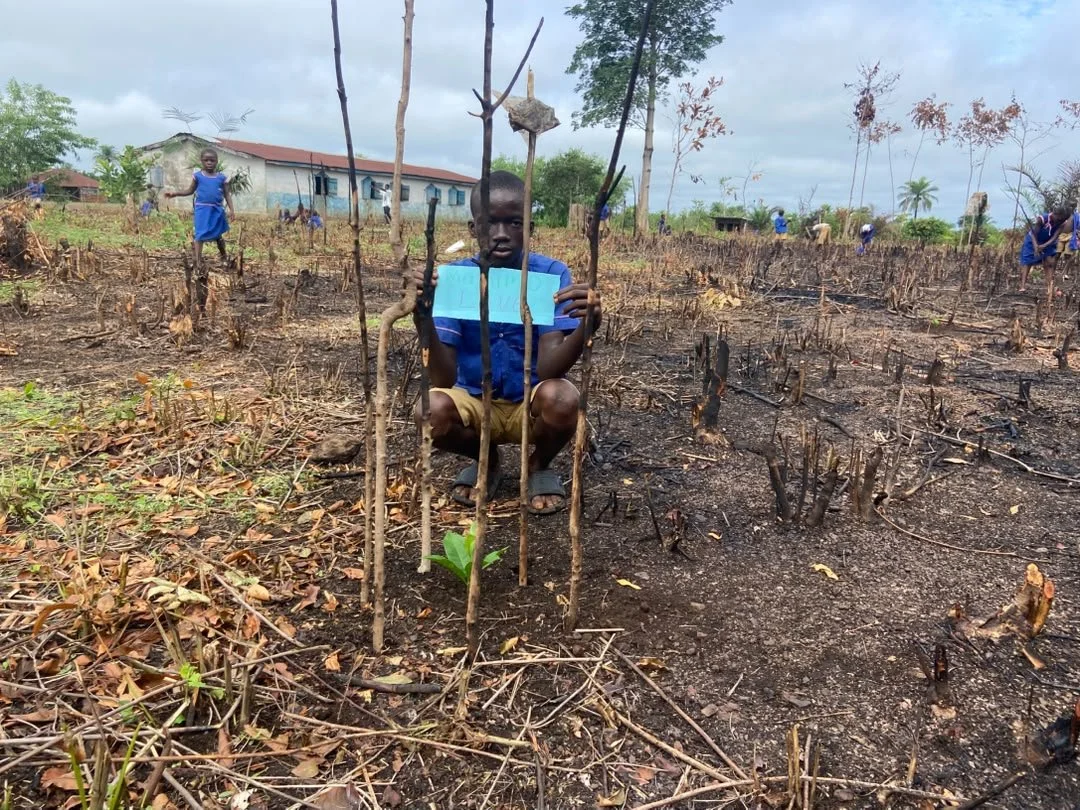
SILCC started to revive the ceremonies in six villages from 2023 to 2025. For us to continue our language work among children, we introduce teaching of the local language in 32 primary schools. In some cases, excess heat in classrooms led to children leaving the building in search of fresh air. We hosted a meeting with the school's head to plant trees in the school environment so that classes could be held under those trees when the classrooms became very warm. We encourage teachers to let the pupils plant the trees for themselves and name the trees in the local language, prioritizing peace building vocabularies.
Preserving the language is preserving the culture which naturally prioritizes environmental peacebuilding.